
Why Does A Hospital Group Operating Model Matter For Patient Care?
Why Does A Hospital Group Operating Model Matter For Patient Care?
Healthcare feels under pressure right now. Demand keeps rising, and resources stay tight. At the same time, leaders must improve quality, control costs, and reduce gaps in care. It sounds clear, but it rarely feels simple.
Large hospital groups face this tension every day. They must keep decisions close to patients, but also align the whole system. So a real question comes up. How does a Hospital Group Operating Model actually work in practice, not just in plans?
Shane DeGaris brings a clear and practical view. He is Group Chief Executive of Barts Health NHS Trust, one of the largest NHS trusts in the UK. The trust runs five hospitals across East London and employs over 20,000 staff. He started in clinical roles, then moved into senior leadership across several NHS trusts.
Before this, he led Hillingdon Hospitals as Chief Executive and managed a multi-site trust. Now, he leads a complex group model that links local leadership with central oversight. He also chairs the Association of NHS Groups and works with national leaders on these models.
In this article, we explain how group models work day to day. We show how structure, workforce, and control stay balanced. We also look at leadership, collaboration, and how change actually moves.
What a Hospital Group Operating Model Means in Practice
An operating model shows how a hospital group actually works day to day. It is not a theory. It is how decisions get made, and care gets delivered.
In a large group, things get complex fast. You cannot run five hospitals like one site. It simply does not work.
So the model must strike a balance. It must keep control local, but also connect the whole system.

Image Credits: Photo by RDNE Stock project on Pexels
How the model works in real life
Each hospital has its own leadership team. They handle daily care, staff, and local issues. This keeps decisions quick and grounded.
However, if each hospital works alone, problems start to show. Standards drift, and teams pull in different directions.
So the model links hospitals together through shared structures.
For example:
- Clinical teams connect across hospitals to keep care consistent
- Support services like HR and finance run at the group level
- Central leadership sets direction and priorities
This creates two clear layers. One handles local delivery. The other keeps everything aligned.
Why this balance matters
If leadership stays too central, staff feel distant from decisions. They stop seeing leaders, and engagement drops. But if everything stays local, variation grows. Systems lose control, and quality becomes uneven. That tension is real. Every large system deals with it.
No single model fits all
Some groups fully merge hospitals into one system. Others stay separate but share services and leadership. Both can work if the structure stays clear.
An operating model turns structure into action. It keeps people aligned, decisions clear, and care consistent.
How a Hospital Group Operating Model Supports Workforce and Control
A group model changes how people grow and how the system holds together. It gives more room, but also more responsibility.
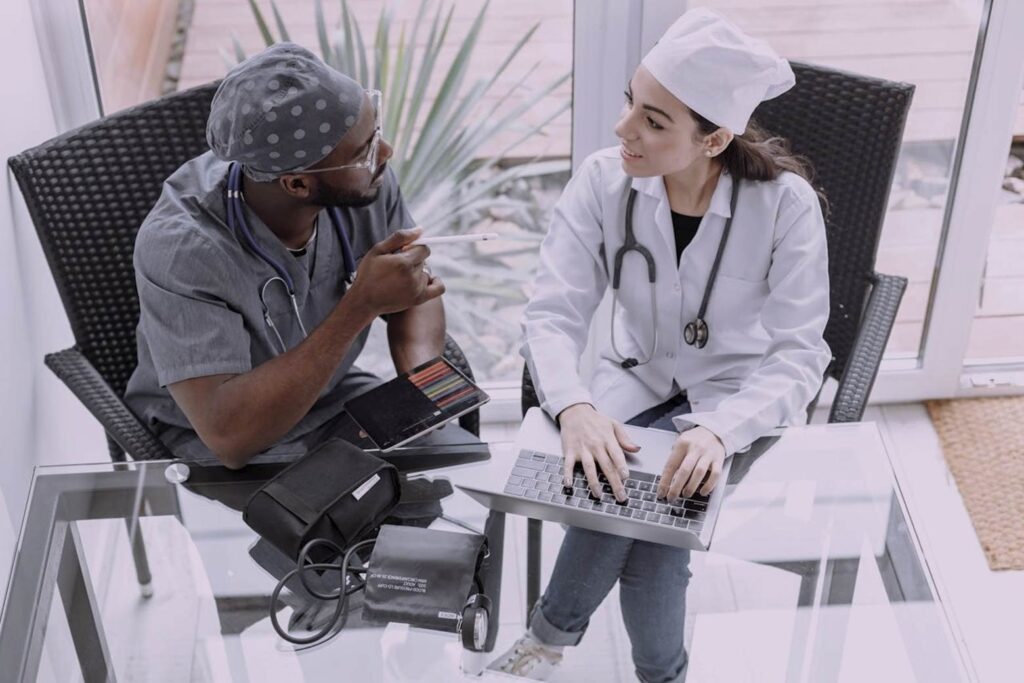
Image Credits: Photo by Thirdman on Pexels
How workforce growth becomes easier
In a single hospital, growth can feel limited. You wait for roles to open, and that takes time. In a group, it is different. People can move across hospitals and roles without leaving. That makes career paths clearer and faster.
It also builds a stronger talent pool. When a role opens, leaders can choose from across the group, not just one site. Training supports this. Many groups offer structured learning, from entry-level to advanced study. So growth feels real, not just promised.
How does control stay balanced
Each hospital runs its own services. That part stays local and practical. However, standards must stay consistent across the group. Quality, safety, and performance cannot vary too much.
So there is always a balance:
- Local teams manage daily care
- The group sets shared standards
That balance needs constant attention. It does not fix itself, and it does not stay stable for long.
How large systems stay agile
At this scale, slow decisions can cause real problems. So the model avoids that. No single hospital can block progress. Leaders discuss, challenge, and then move forward.
Not everyone agrees every time. That is fine. The system still needs to act. Sometimes trade-offs happen. One hospital may carry less pressure, so the group performs better overall.
How the model supports system change
Big shifts, like moving care into communities, sound simple. In reality, they are not. Everyone agrees on the goal. But the path is still unclear, and that creates tension.
One rule helps keep things grounded. Work must move before resources move. Digital change also improves at scale. Shared systems and data make progress faster.
The group model builds stronger teams, keeps control steady, and helps change move without chaos.
How a Hospital Group Operating Model Drives Collaboration and Leadership
A group model only works if collaboration stays strong at every level. Without it, the system starts to pull apart.

Image Credits: Photo by Ivan S on Pexels
How collaboration works across the system
Inside the group, hospitals must act as one. Shared structures like clinical networks and boards help teams stay aligned. These structures connect people, reduce variation, and improve standards. When they work well, the system feels joined up.
However, collaboration also extends beyond the group. Large systems often serve millions across different providers.
So organisations work together on:
- Shared clinical pathways
- Reducing inequalities across regions
- Using resources more effectively
That said, not all collaboration helps. If work does not add value, it slows things down.
Also, local partnerships matter. If a hospital already works well with its local system, that should stay protected.
How clinical leadership works in practice
Clinical leadership runs in two directions. This is where things can feel a bit messy. At the hospital level, leaders focus on daily care. They adjust services based on local needs.
Across the group, clinical networks take a wider view. They look at shared issues and set common standards.
So one hospital may change how a service runs. That stays local. But wider issues, like patient flow or safety, get handled across the group.
How everything stays connected
This model only works if decisions stay linked to a clear direction.
Leaders must connect:
- Group strategy and priorities
- Ideas from frontline teams
- A strong focus on quality improvement
However, balance is key. Too much control blocks new ideas. Too much freedom creates inconsistency.
So leaders guide rather than control. They create conditions where teams can act and stay aligned.
Collaboration and clinical leadership connect local action with system-wide goals. That link keeps everything moving forward.
How a Hospital Group Operating Model Drives Innovation and Impact
A group model must stay clear on its purpose. It must deliver safe care, manage money well, and meet standards. That is the base, and it does not change.
However, scale creates real opportunity. It allows faster progress, but only if the focus stays on real problems.

Image Credits: Photo by RDNE Stock project on Pexels
Keeping innovation grounded
Innovation must stay practical. It should solve real issues, not chase trends. So ideas must link to clear service needs. If something does not improve care, it should stop early.
Moreover, large groups can work with universities, industry, and research partners. This helps test ideas and grow what works.
That said, one rule matters. Innovation must benefit the local population, especially in deprived areas.
Acting as a local anchor
A large hospital group does more than deliver care. It shapes the local economy in a direct way. It creates jobs, supports training, and opens paths into healthcare roles. This matters where unemployment stays high.
For example, many groups focus on:
- Apprenticeships and entry routes for local people
- Links with schools and colleges
- Programmes that help young people into work
These steps do more than fill roles. They improve long-term health through stable work.
Using digital and AI properly
Digital tools offer real gains, but only if used well. First, teams must use what they already have. Many systems sit underused, and that wastes value.
Then, new tools can support automation and better data use across services.
However, too many tools create confusion. It is better to focus on a few priorities and do them well.
What comes next
The model must keep evolving. It must support more care in communities while keeping strong hospital services. It must also improve specialist services and reduce overlap.
The model must stay focused, adapt when needed, and deliver real value where it matters most.
Conclusion
In short, a Hospital Group Operating Model works when it keeps things clear and practical. It links people, decisions, and standards without slowing care. That balance is hard, and it needs constant focus.
Moreover, the model cannot stay still. Teams must keep talking, testing, and adjusting as needs change. If they stop, problems build fast, and performance drops. That part often frustrates leaders, but it is real.
However, structure alone does not fix anything. People make it work, or they don’t. Strong leadership, clear roles, and honest teamwork keep everything moving. Without that, even a good model falls apart.
That said, the results show over time. Care becomes more consistent, staff grow faster, and decisions happen with more clarity. The system feels connected, not scattered.
So the aim stays simple. Keep things clear, stay close to real work, and fix issues early. Do that well, and the model holds. Ignore it, and it breaks.