
Leadership development: The power of alignment and shared intent
Author: Sarah Amies
12 April 2024
‘No man is an island’ John Donne (1572 – 1631) wrote in his famous poem. We belong to and need each other. A sentiment contrasted by Simon and Garfunkel in ‘I am a rock I am an island’ revealing we are not always comfortable with our neediness and interdependence. However, the fact remains that we are not islands; we do need each other, and so we align, partner and collaborate.
Alignment
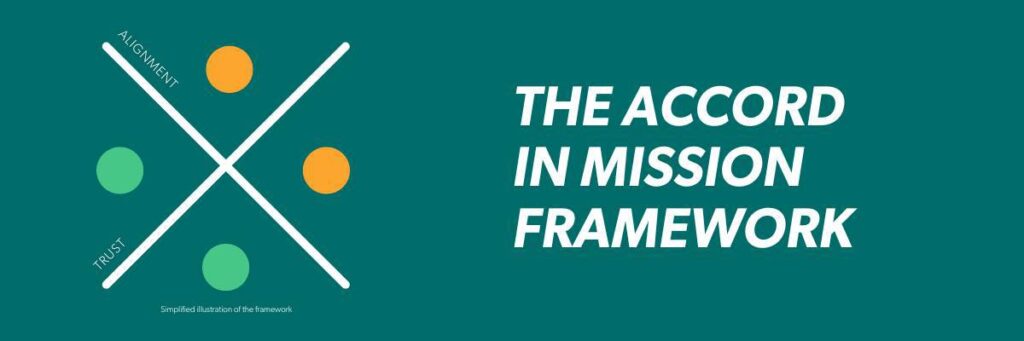
In the autumn, we introduced you to our latest thinking on Leadership and interpreting your leadership context. Leaders operate in dynamic environments, often with multiple stakeholders and it is inevitable they will need to be able to adapt their style and approach over time and according to context. The Accord in Mission Framework explores different dimensions of leadership using two concepts: Trust and Alignment.
Shared Intent
Where people share intent, they may choose to work together to reinforce the effort towards their intent. Adding weight behind the effort through additional effort, for example supporting a campaign, or adding value through providing something specific, for example skills, knowledge or access to new people and opportunities.
Shared intent alone does not necessarily mean we work together. We can pursue the same goals independently and self-sufficiently, or in competition with others. The case for alignment comes when the size of the task or goal requires reinforced effort because on our own we are less likely to achieve it, or achieve it as soon as we’d like. In other words scale or speed can present the case for people working together where they might not otherwise be inclined, or when the complexity of the task requires a wider breadth of experience or expertise than we have on our own. We saw this in action over the pandemic where natural competitors collaborated to tackle an ambitious goal in a challenging timescale – to create effective vaccines and distribute them at large.
As well as natural competitors aligning, we saw diverse partnerships where businesses from different sectors aligned and shared resource and expertise to support initiatives that they would not normally engage in to tackle a larger than usual problem. An example would be non-healthcare businesses engaging in the production of PPE materials and testing kits. These alignments were driven by a shared necessity for survival, a common enemy and challenge affecting all business sectors not just healthcare.
These alignments were catalysed not only by the scale, speed and complexity of the task, but through recognising mutual needs and benefits. Within the overarching shared intent to tackle the pandemic, there was ‘mutualism’ at work providing the glue for these collaborations.
If you would like to discuss any of the above further or how to apply the Accord in Mission Framework in your organisation, please get in touch.
Next week we will explore another root of alignment, complementary purposes.